How to Take Your Instagram Business Online in Nigeria
A practical guide to moving your Instagram business online in Nigeria: fixing the DM bottleneck, taking orders, and getting paid reliably.
How to Take Your Instagram Business Online in Nigeria
Instagram is often where a Nigerian business first finds its audience. Good photos, a consistent feed, maybe a few reels, and people start noticing. The problem shows up after that: someone likes a post, sends a DM asking "how much," and from there the sale depends entirely on how quickly you can reply and how patient they're willing to be. This guide covers how to keep using Instagram for what it's good at while fixing the part that quietly costs you sales.
What Instagram does well, and what it doesn't
Instagram is strong for:
- Visual discovery. A well-shot feed or reel can bring in customers who've never heard of you.
- Building a brand look and voice over time.
- Reaching people through shares, tags, and algorithm-driven discovery.
Where it struggles is everything after the "I want this" moment:
- No real catalog customers can browse with prices attached
- No cart or checkout. Every order is negotiated fresh in DMs
- No order history, so you're relying on scrolling back through chats to remember what someone ordered
- Old posts for sold-out items keep resurfacing, confusing new visitors
None of this means you should leave Instagram. It means Instagram works best as the discovery layer, with something more structured handling everything after that.
Step 1: Fix the price-in-DM bottleneck
If your Instagram bio or posts don't show prices, you're adding an extra step that loses buyers before they even reach you. A visible price list, even a simple one linked in your bio, removes friction and filters out browsers from genuinely interested buyers before they message you.
Step 2: Give people one link that shows your full catalog
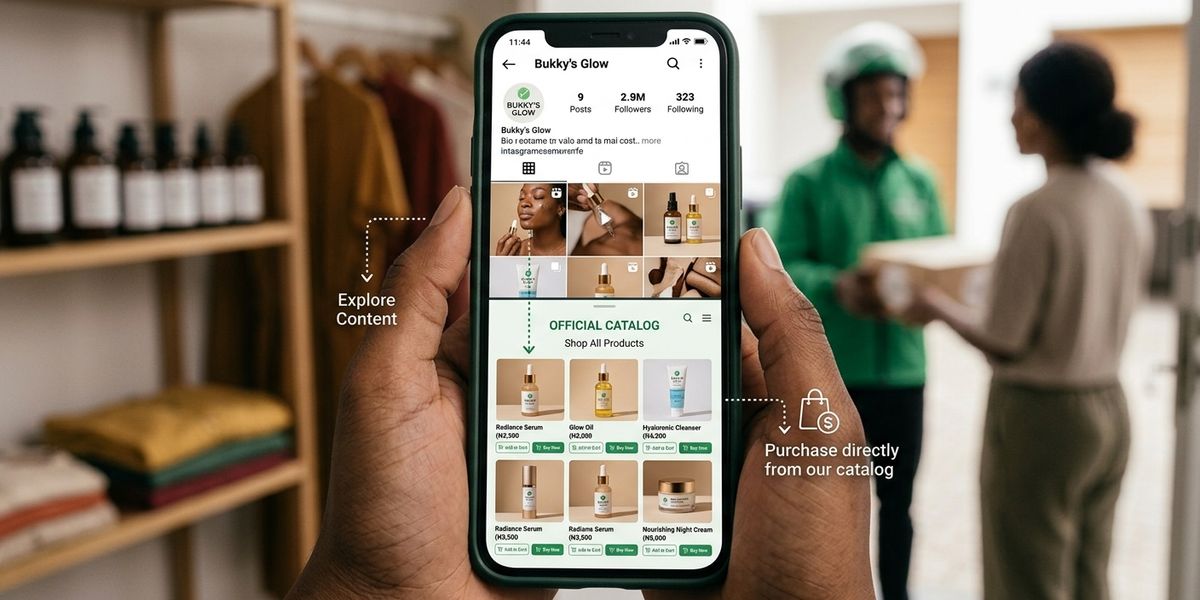
Instagram limits you to a single clickable link in your bio. That link should lead somewhere that actually shows what you sell, current prices, and availability, not just a generic "contact us" page. This is the single biggest upgrade most Instagram sellers can make: turning "message me and I'll tell you what I have" into "here's everything, browse and pick."
Step 3: Structure how orders actually get placed
Once someone knows what they want, the path from "I want this" to "I've ordered this" should be short and clear. That could mean:
- A storefront linked from your bio where they can select items and either check out directly or send you a clear order summary
- A consistent format you ask DM customers to follow (item, quantity, delivery address) so you're not chasing missing details
- A confirmation message once an order is logged, so there's no ambiguity about what was agreed
Step 4: Set up payment collection that doesn't rely on screenshots
Instagram sellers often default to sharing bank details in DMs and asking for a screenshot as proof. This works at low volume but becomes hard to track and easy to dispute once you're handling more orders. A payment link that supports card, transfer, and USSD removes a lot of this friction and gives you a clearer confirmation than a screenshot alone. See how to accept online payments in Nigeria for the full breakdown.
Step 5: Handle delivery the same way, regardless of channel
Whether an order came through Instagram, WhatsApp, or a website, delivery should work the same way: a clear price, a realistic timeframe, and a plan for what happens if something goes wrong. See how to deliver products to customers in Nigeria for a full walkthrough, since inconsistent delivery experiences across channels are a common source of complaints.
Common mistakes Instagram sellers make
- No prices anywhere on the page. Forces every interested buyer into a DM just to find out if it's in their budget.
- Sold-out posts left up with no update. New visitors message about items that no longer exist.
- Every order negotiated fresh, with no consistent format. Slows you down and increases the chance of details getting lost.
- Payment tracked only by screenshot. Hard to reconcile and easy to dispute once volume grows.
- Treating Instagram as the whole business rather than the discovery layer. If the account gets restricted or reach drops, there's no backup.
When it's time to add a proper storefront
If you're still getting a manageable number of DMs a week and can track orders in your head, Instagram alone might still work fine. It's usually time to add a structured storefront once:
- You're spending significant time each day just answering "how much" and "is this available"
- You're losing track of who ordered what, or who's paid and who hasn't
- You want a single link that works whether traffic comes from Instagram, WhatsApp, or word-of-mouth
How Zerrar fits in
Zerrar gives you a catalog and storefront you can link directly from your Instagram bio, so browsing and ordering happen in one organized place instead of scattered across DMs and Story replies. Orders and payments land in one dashboard no matter which channel they came from. If DMs have become your main bottleneck, you can create your online store on Zerrar and connect it to the products you're already posting.
Frequently Asked Questions
Do I need a website if I already sell well on Instagram? Not necessarily. Many sellers do fine on Instagram alone at lower order volumes. A storefront becomes more useful once DM negotiation and manual tracking start costing you real time.
How do I stop people from ghosting after asking for a price? Showing prices directly, rather than requiring a DM to find out, tends to reduce this significantly. It filters out casual browsers earlier in the process.
Can I link my Instagram directly to a storefront? Yes. Most sellers put their storefront link in their Instagram bio, and some add it to Story highlights or individual post captions where relevant.
Should I stop using Instagram once I have a proper store? No. Instagram remains valuable for discovery and brand-building. The storefront handles what Instagram isn't built for: browsing, ordering, and tracking.
How do I handle orders that come through Instagram Story replies? Story replies function like DMs and have the same tracking limitations. Directing interested buyers to a consistent catalog link, rather than negotiating entirely in Story replies, makes these easier to manage.
Conclusion
Instagram is genuinely good at getting people interested in what you sell. It was never built to handle what happens after that: browsing a full catalog, placing a clear order, paying reliably, and tracking delivery. Keep Instagram for discovery, and give the rest of the journey somewhere more structured to happen.
Spending more time answering DMs than actually selling? Create your online store on Zerrar and link it straight from your Instagram bio, so browsing and ordering happen in one place.