How to Start an Online Business in Nigeria (Beginner's Guide)
A beginner-friendly guide to starting an online business in Nigeria, from picking what to sell to your first order, with no prior experience needed.
How to Start an Online Business in Nigeria: A Beginner's Guide
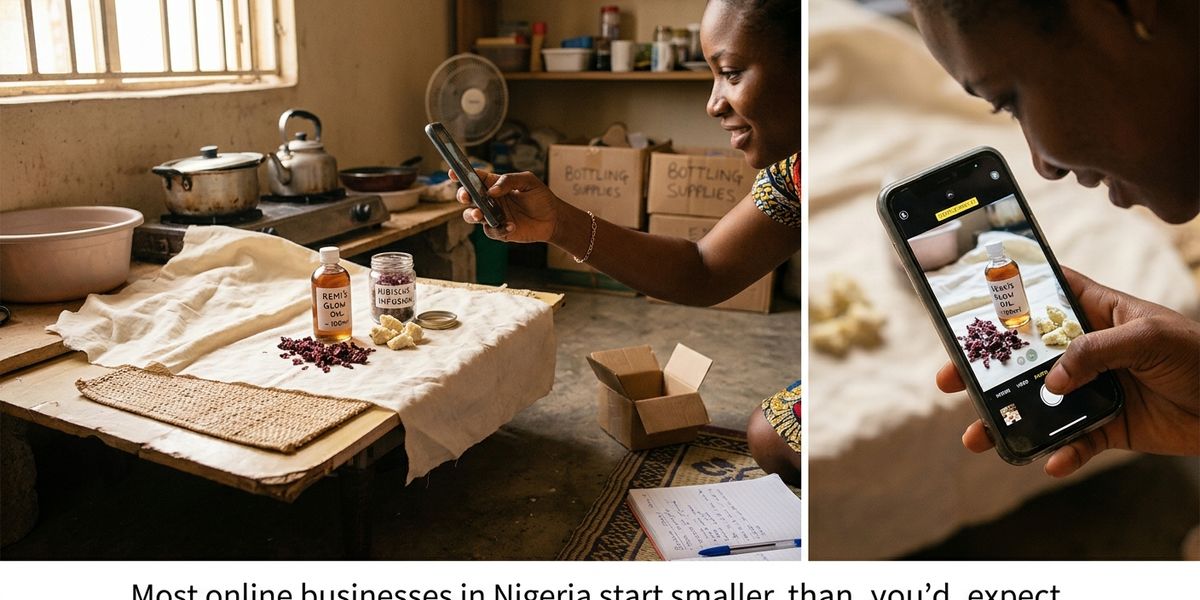
Starting an online business in Nigeria doesn't require capital for a shop, a registered company, or years of business experience. Many successful sellers started with a phone, a handful of products, and a WhatsApp or Instagram account. This guide walks through the actual first steps, from deciding what to sell to taking your first real order, without assuming you already know how any of it works.
Step 1: Decide what you're actually selling
Before anything else, get specific about your product or service. Vague ideas like "I want to sell fashion" are harder to act on than something concrete like "I want to resell women's shoes I source from a local supplier." A few honest questions help narrow this down:
- Do you already have access to a product (something you make, a supplier relationship, or something you can source easily), or are you starting from zero?
- Is there a clear buyer for this among people you already know, or will you need to find customers from scratch?
- Can you start small, testing with a handful of items before committing significant money?
You don't need a perfect answer here. Many sellers refine what they sell after their first few sales teach them what actually moves.
Step 2: Start where your first customers already are
Your first sales are more likely to come from your existing network than from strangers finding you online. This is why most Nigerian online businesses start on:
- WhatsApp Status, showing products to your existing contacts
- Instagram, if you're comfortable posting regularly and building an audience over time
- Word of mouth, asking friends and family to share what you're doing
None of this requires a website or any technical setup. It requires consistency: posting regularly, responding promptly, and following through on orders.
Step 3: Take your first orders and learn from them
Your first handful of orders will teach you things a business plan can't:
- What questions buyers actually ask before purchasing
- Whether your pricing is realistic for what people are willing to pay
- What delivery actually costs and how long it realistically takes
- Whether the product you chose is easy or hard to sell
Treat these early orders as information gathering, not just income. What you learn shapes everything that comes after.
Step 4: Sort out how you'll get paid
Even at a small scale, decide upfront how customers will pay you. Common starting points:
- Bank transfer, asking for a screenshot as informal proof, which works at low volume if you're diligent about checking your actual account
- A payment link, if you want a more structured process from the start
Whichever you choose, confirm payment has actually landed before you ship anything. See how to accept online payments in Nigeria for a fuller breakdown as your volume grows.
Step 5: Figure out delivery before you need it
Decide your delivery approach before your first order, not during it. At minimum, know:
- Roughly what you'll charge for delivery
- How you'll actually get the item to the customer (yourself, a dispatch rider, or a logistics company)
- What you'll do if a customer isn't reachable when the item arrives
See how to deliver products to customers in Nigeria for more detail once you're past your first few orders.
Step 6: Keep basic records from day one
Even a simple notebook or spreadsheet tracking what was ordered, what was paid, and what was delivered will save you real confusion later. It's much easier to build this habit from your first sale than to try to reconstruct it after fifty orders.
Step 7: Know when to add more structure
At the very beginning, simplicity matters more than tools. As orders increase, a few signs suggest it's time to add a more organized catalog or store:
- You're retyping the same product information repeatedly
- You're losing track of orders or payments
- You want a way for new customers to see your full catalog, not just whatever you last posted
This is a later step, not a first one. Don't add tools or platforms before you have a real need for them.
Common mistakes first-time online sellers make
- Overthinking the setup before making a single sale. A polished plan matters less than actually testing whether people will buy.
- Pricing based on guesswork rather than actual costs. Factor in your product cost, delivery, and any payment fees before setting a price.
- Not confirming payment before shipping. This is one of the most common ways new sellers lose money early on.
- Trying to be on every platform at once from day one. Start with one or two channels you can manage consistently, and expand once you've found a working rhythm.
- Giving up after a slow first week. Most online businesses take time and consistency to build momentum, particularly through word of mouth.
How Zerrar fits in
Once you've made your first few sales and want a more organized way to manage products, orders, and payments, Zerrar gives you a catalog and storefront you can set up yourself, connected to WhatsApp so you're not starting your customer relationships over from scratch. If you're ready for that next step, you can create your online store on Zerrar and bring in the products you're already selling.
Frequently Asked Questions
Do I need money to start an online business in Nigeria? Not necessarily a large amount. Many sellers start by reselling a small quantity of products, or by selling something they already make or have access to, without significant upfront capital.
Do I need to register a business to start selling online? Not to start. Many sellers begin as individuals and consider formal registration later, once the business is established. Some payment providers may have documentation requirements as you scale, so it's worth checking with your chosen provider.
How do I find my first customers? Most sellers start with their existing network: friends, family, and social media contacts, who often share with their own networks in turn. Word of mouth remains one of the strongest channels for a new business in Nigeria.
What should I sell if I don't have a product idea yet? Start with something you already have access to or knowledge of, whether that's a skill, a supplier relationship, or a product you personally use and understand well. It's easier to sell something you genuinely know.
How long does it take to become profitable? This varies significantly by product, pricing, and how consistently you're selling. Focus on learning from your early sales rather than expecting quick results in the first few weeks.
Conclusion
Starting an online business in Nigeria is more accessible than it looks from the outside. You don't need capital for a shop, a developer, or a business registration to make your first sale. You need a product, a way to reach people who might want it, and the discipline to follow through on orders reliably. Everything else, catalogs, payment systems, and delivery partners, can be added as your business actually needs them.
CTA
Made your first few sales and ready to get organized? Create your online store on Zerrar and bring the products you're already selling into one place.